What a loaf pan liner is
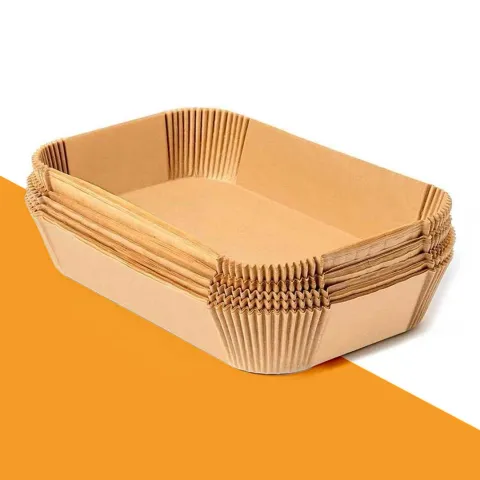
A loaf pan liner is a greaseproof paper cup pressed into the shape of a loaf. It has a flat base, sloped sides and tightly pleated walls, so it holds its shape before any batter goes in.
You drop it into a metal loaf pan, fill it, bake, and lift the whole loaf out by the paper. The pan stays clean and the loaf keeps its square shoulders.
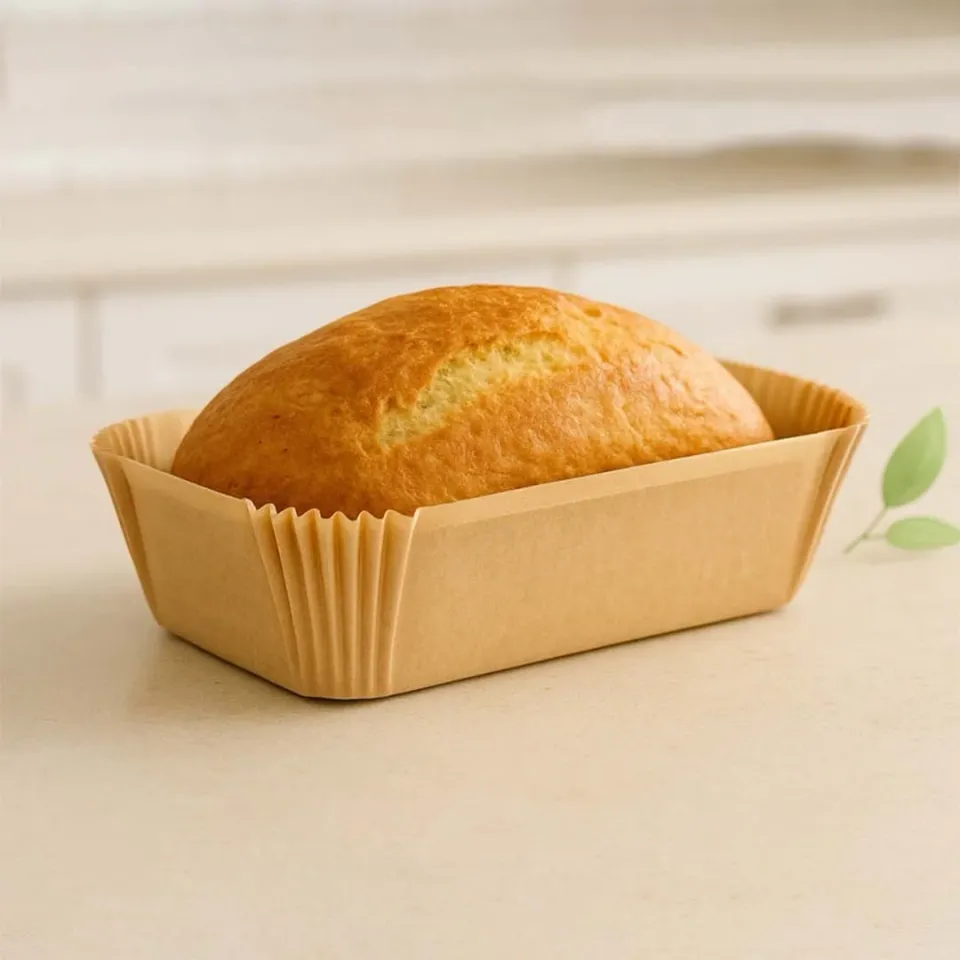
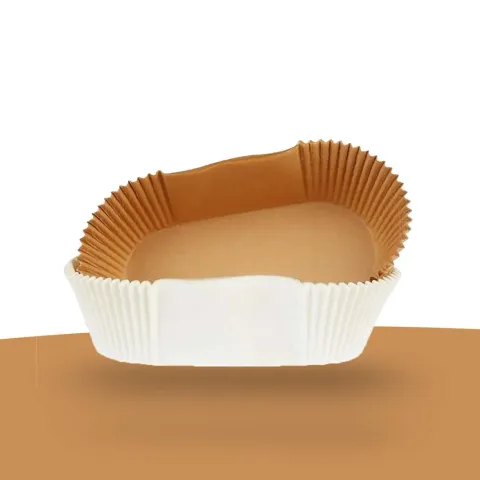
Bakeries, cafés with a pastry case, caterers and home-based bakers use them for pound cake, banana bread and quick breads. The photos show the two stocks we run: natural kraft, and bleached white sitting inside a dark metal pan.
Which loaf pan liner size fits my pan?
Match the liner to the inside base of your pan, not the rim. A liner that is too long buckles at the ends and traps batter in the fold.
| Typical liner (base) | Pan it usually fits | Common bake |
|---|
| 5.75 × 3 in (mini) | Mini loaf pans, 4-up and 8-up linked trays | Gift loaves, tasting slices |
|---|
| 7.5 × 3.5 in (small) | Pans sold as 8 × 4 in | Banana bread, zucchini bread |
|---|
| 8.5 × 4.5 in (standard) | Pans sold as 9 × 5 in | Pound cake, meatloaf, sandwich loaves |
|---|
| 9 × 5 in (large) | Pans sold as 10 × 5 in and deep commercial pans | Fruit cake, large tea loaves |
|---|
Pan labels in the US quote the top inside measurement, and the base is usually about half an inch smaller each way. That is why an 8.5 × 4.5 in liner is the usual pick for a pan sold as 9 × 5 in.
Wall height on the standard and large sizes is typically about 2.5 in, which clears the batter line once the loaf rises. Any other base or wall height is a custom cut, and our sheet and roll size chart shows how we measure.
How the paper behaves in the oven
The stock is a dense greaseproof sheet, so butter and oil in the batter stay in the loaf rather than soaking into the pan. Oven-safe grades handle up to 400°F, which covers every loaf cake and most breads.
Steam from the crumb passes through the paper slowly, so the sides brown instead of going soggy. Sugar-heavy batters can caramelize where they touch the pleats, but the liner still releases because the sheet does not stick on its own.
Once baked, the liner holds the loaf firmly enough to carry to a cooling rack. Leave it in the paper until it is cold and it cuts cleaner.
Kraft or white, and which weight?
Kraft reads as rustic and hides any butter shadow on the walls. White looks clean and lets a golden crust show against a pale edge, which is what most pastry cases want.
Typical weight for a loaf liner is about 35–40 lb. Lighter sheets slump when the batter hits them; heavier ones stand taller, but the pleats go stiff and crack at the corners.
If you bake dense, wet batters such as carrot cake, go to the top of that range. For airy sponge the lighter end is fine. Our guide to greaseproof paper weight walks through the trade-offs.
Do loaf pan liners need greasing?
No. The greaseproof sheet is the release layer, so skip the spray and the parchment strip. Oil on the outside of the liner only makes it slide around in the pan while you pour.
The one exception is a very lean dough with no fat at all, where a dusting of flour inside the liner helps the crust let go. Most loaf cake recipes carry enough butter or oil that nothing extra is needed.
Nonstick pans and the liner get along fine. The pan still does the job of holding the shape; the paper only takes over the release and the cleanup.
Using them on the bench
A pre-formed liner is quicker than cutting and folding parchment, but it still pays to drop it in the right way.
- Pull one liner from the nested stack by the base, not the pleated rim, so the walls do not tear.
- Set it in the pan and press the base flat with your fingertips; the pleats open out against the pan walls.
- Pour batter to about two thirds of the wall height, which leaves room for the rise.
- Bake as usual. The liner adds no time to the bake because the sheet is thin.
- Lift the loaf out by the two long walls after it has rested ten minutes, then cool it on a rack in the paper.
Mistakes we see with loaf liners
Most problems come from the fit, not the paper. The kraft liner in the first photo stands on its own with a baked loaf inside, but it did not bake that way; a pan held it.
- Ordering the rim size of the pan rather than the base, so the liner is too long and folds over at the ends.
- Filling liners on a sheet tray with no pan around them; a standard liner is not a free-standing mold for a heavy batter.
- Running the oven above 400°F for a long bake, which darkens the pleat tips.
- Storing cartons next to the proofer, where humidity softens the pleats before use.
- Picking a tall-wall liner for a shallow pan, so the surplus wall flops inward onto the crust.
Mini kraft liners are the one case where free-standing works. They are stiff enough to bake on a sheet tray with a light batter, which is how many bakeries do gift loaves.
Can I use loaf pan liners for meatloaf and savory bakes?
Yes. The same greaseproof sheet that holds butter holds rendered fat from ground beef or sausage, and it stops the pan scorching where the fat pools.
Caterers like the mini size for individual meatloaves and the standard size for terrines that need to come out whole. Freeze-and-reheat works too: the paper goes from 0°F into the oven without splitting, as long as the liner is not soaked through.
One caution: an acidic tomato glaze can leave a tide mark on white paper. Kraft hides it.
Packing and how to order
Liners arrive nested in stacks inside a carton, base to base, so they keep their shape on the shelf. The minimum order is 1,000 liners.
Send the inside base measurement of your pan and the wall height you want, or just tell us the size printed on the pan and we will work it back. You get a written quote within one business day, and payment is by invoice once you approve.
These are plain, unprinted liners. If you want a logo on the wall, our printed loaf pan liners use the same forms. Production takes 4–6 business days after approval, and tracked delivery to US addresses is free and takes 2–3 business days.