What does basis weight mean?
Basis weight is the weight of a ream of paper at a standard sheet size, written in pounds. For greaseproof, the practical range is about 25 lb at the light end to about 45 lb at the heavy end.
A higher number means more fiber in every square inch. The sheet is thicker, stiffer and a little more opaque, and a case of it is noticeably heavier to carry. Thickness is measured separately, but for greaseproof the two track closely, so weight is a fair shorthand for thickness.
It does not tell you about grease hold-out on its own. A dense 30 lb sheet can outperform a loose 40 lb one; weight sets the feel and the pulp sets the barrier. Our custom printed greaseproof sheets are quoted by weight and size together.
Light, standard or heavy: the three bands
We group greaseproof into three bands. The numbers overlap at the edges, so treat them as a guide rather than a wall.
| Band | Typical weight | Feel in the hand | Where it fits |
|---|
| Light | 25 to 30 lb | Soft, drapes, slightly see-through | Single wraps, sandwich sheets, cone liners |
|---|
| Standard | 30 to 38 lb | Crisp fold, holds a crease | Burger wraps, basket liners, deli sheets |
|---|
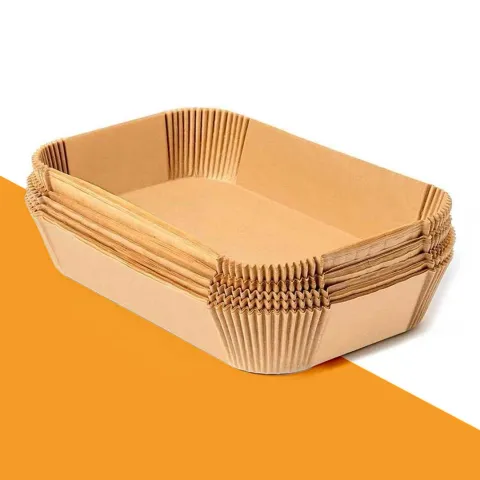
| Heavy | 38 to 45 lb | Stiff, board-like, opaque | Tray liners, air fryer liners, loaf liners |
|---|
Standard is the usual pick. If you are not sure, start there and move one band in either direction after a sample. If a buyer cannot decide, we quote 35 lb and suggest a lighter sample alongside it.
How weight changes the fold
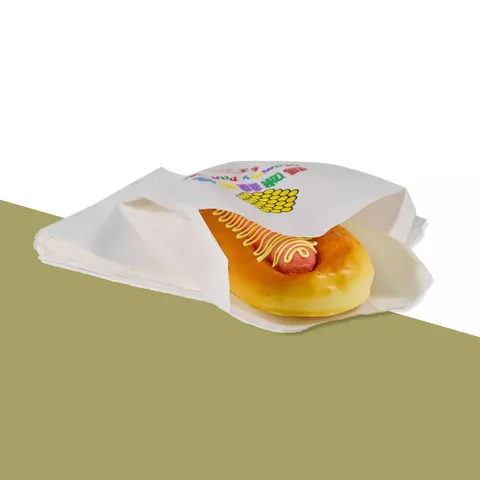
A light sheet folds like tissue. It wraps tight around a burger and the ends tuck under without springing back, which is why fast counters like it.
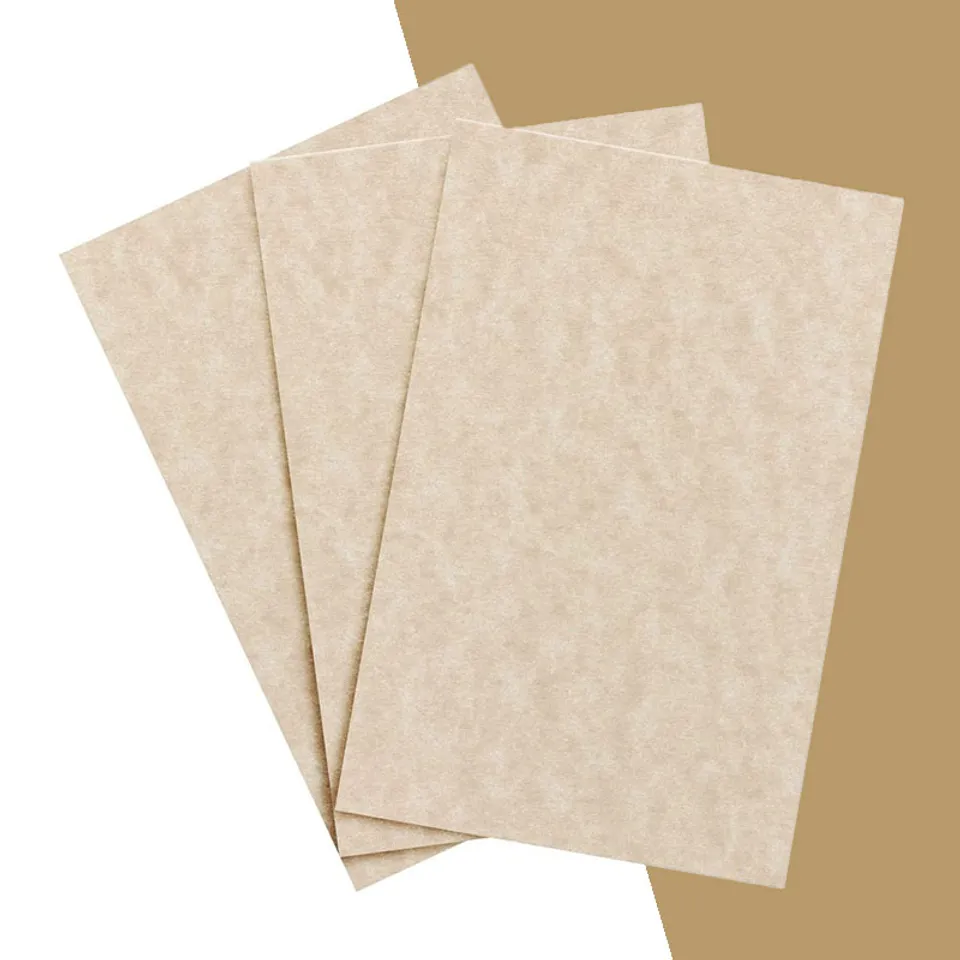
A standard sheet holds a crease. Fold it once and it stays folded, so a half-wrapped sub keeps its shape on the tray. Most of the sheets in our product photos are this weight, which is why they sit in a neat stack and fold without springing.
A heavy sheet resists folding. It will crack along a sharp crease if you force it, so it suits flat uses where it lies in a basket or lines a pan.
Grain direction matters too. Every sheet folds more easily along the grain than across it, so tell us which way your staff fold and we cut the sheet to suit.
Does heavier paper hold more grease?
A little, but not in proportion. Doubling the weight does not double the hold-out time, because grease crosses a greaseproof sheet by finding gaps between fibers, not by soaking through bulk.
Where heavy paper helps is with sharp food. Fried chicken bones, hard taco shells and crusty bread poke through a 25 lb sheet and open a path for oil. A 40 lb sheet shrugs them off.
Heavy paper also stays dry-looking longer. The extra opacity hides the first faint grease marks that show on a light sheet within minutes.
Where the pulp is the same, a heavier sheet buys you time rather than a different result. Expect a few extra minutes before marks show, not an extra hour.
Which weight for wraps?
For a burger, chicken sandwich or breakfast wrap, 30 to 35 lb is the sweet spot. It folds, it hides grease for the length of a lunch service and it does not bulk up a delivery bag.
Go lighter, 25 to 28 lb, for a sandwich that is wrapped and eaten within minutes, or for a second inner sheet inside a box. Food trucks tend to go a step lighter than a sit-down counter, because the wrap is eaten within minutes and a slimmer case takes less shelf.
Go heavier, 35 to 38 lb, for a double burger with sauce or for anything that travels 20 minutes in a bag. Our burger wrap paper in four sizes is usually run in this band.
Which weight for liners and trays?
Liners do a different job. They sit flat, catch drips and get picked up with the basket, so they need stiffness more than fold.
A basket liner at 35 to 40 lb lies flat without curling at the corners. Lighter stock lifts at the edge and sticks to the fries.
Loaf liners are a special case. They are heavy, 40 lb and up, but they are pleated rather than folded, so the stiffness holds the pleat open while batter goes in.
Tray and pan liners go heavier again, 40 to 45 lb, because a sheet lining a hot sheet pan carries weight and heat at once. Greaseproof basket liners and tray liners are both quoted in these weights.
Weight and print
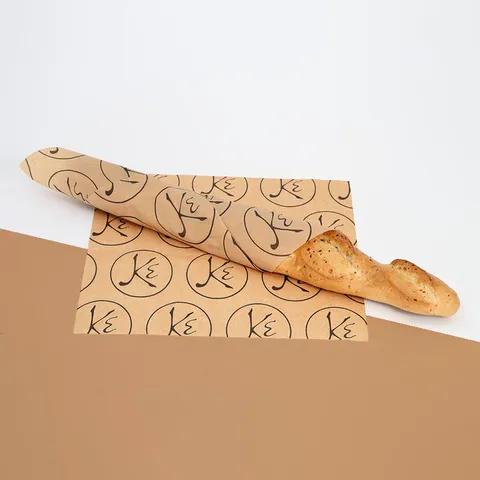
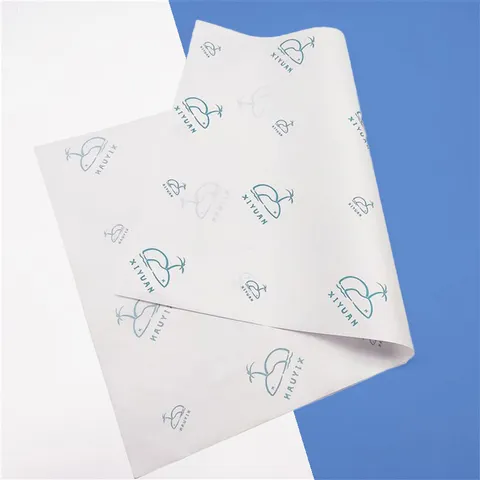
Light greaseproof is slightly translucent, so a step-and-repeat logo shows faintly through from the back. On white stock this reads as a soft echo; on kraft it mostly disappears.
Standard and heavy sheets are opaque enough that the print sits on one face only. If you want a bold two-color design, 35 lb and up gives you a cleaner white behind it.
Ink coverage changes with weight too. A light sheet drinks in a solid fill and can look blotchy; a heavy sheet holds the ink nearer the surface and the fill reads even.
Textured stock is the exception. A textured greaseproof sheet is usually run at standard weight, and its mottled surface softens fine lines, so keep type large.
Signs you ordered the wrong weight
Most weight mistakes show within a week of the first delivery. Watch for these.
- Wraps spring open on the tray: too heavy for a tight fold.
- Grease shows on the outside within five minutes: too light for the food.
- Corners of liners curl up in the basket: too light, step up 5 lb.
- Sheets crack along the crease: too heavy, or folded against the grain.
- Staff use two sheets per order: too light; one heavier sheet does the job of two.
- Print looks ghosted from the back: light stock on a white sheet.
None of these mean the paper is faulty. They mean the weight and the job do not match, and a 5 lb step usually fixes it.
How to pick a weight in five steps
If you have never bought by weight before, this order of questions gets you to the right band without guessing.
- Write down the food, its temperature when wrapped and how long it waits.
- Decide whether the paper folds around the food or lies flat under it.
- Start at standard, 30 to 38 lb, unless the food is sharp, heavy or sits in a pan.
- Ask for samples in two neighboring weights on your quote request.
- Run both through a real service and keep the one staff reach for without being told.
If you line an air fryer basket, start heavy. The tray and air fryer liners are cut from 40 to 45 lb stock for exactly that reason.
What to tell us on the quote
Give us the weight band if you know it, or just describe the job and let us suggest one. Add the sheet size, the number of ink colors and your quantity. If two weights are in the running, say so. We would rather quote both than have you guess.
We reply with a written quote within one business day, then a free proof. Production is 4 to 6 business days after approval, with free tracked delivery in the US.
Minimum is 1,000 sheets, and you can split a run between two weights if you want to compare them on the line. Start on the written quote form.