A boxed roll with a tear edge, for the meat counter
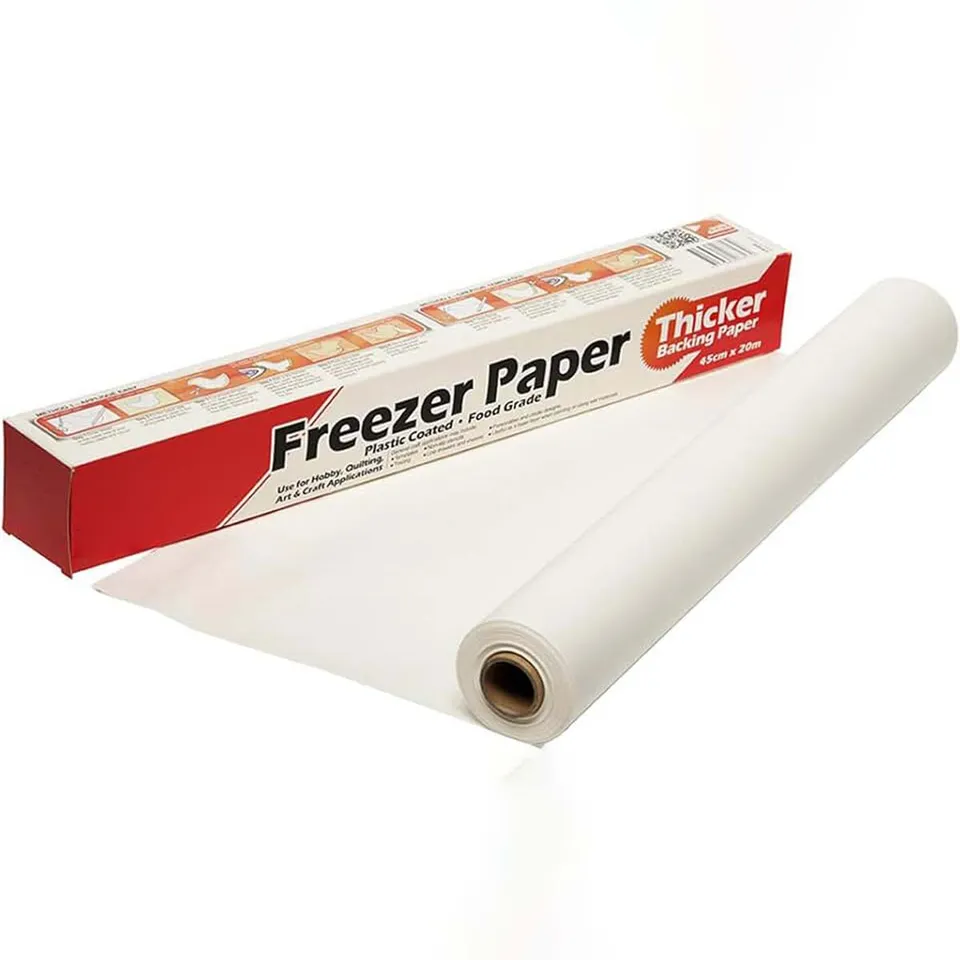
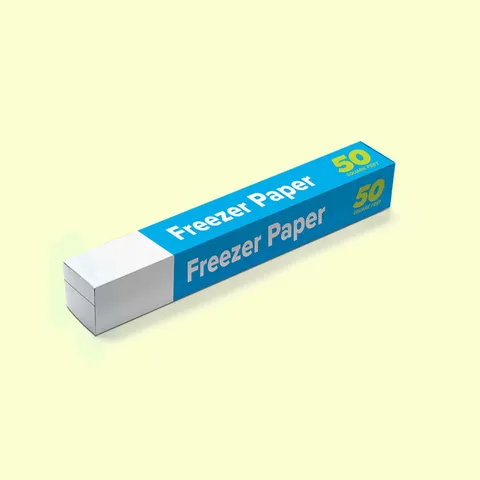
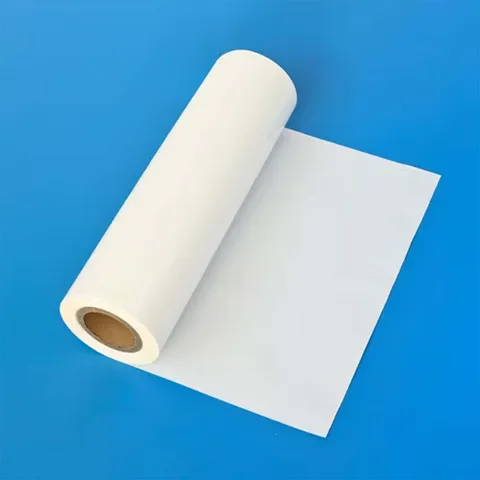
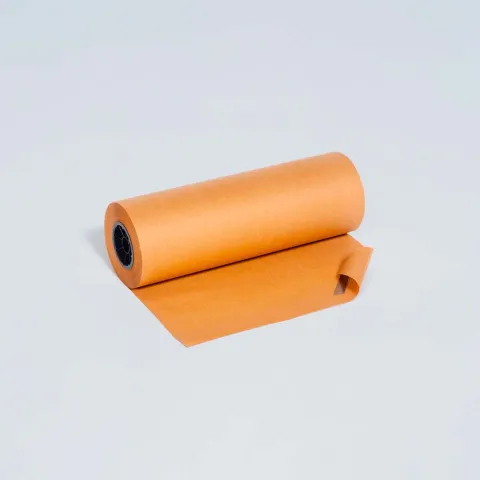
The photos show the short-length version: a white roll inside a long printed carton with a serrated metal edge along the lid, and the paper pulled out across a wooden table with the end of the roll showing its brown core. That is the format a butcher keeps on the counter and a home processor keeps in a drawer.
The long rolls are different. At 1,000 ft the roll is too fat for a carton, so it ships bare on a core and sits in a bench or floor dispenser with its own blade.
Butchers, fish counters, deer and hog processors, meat-box farms and barbecue kitchens that portion and freeze are the buyers. Home cooks who buy a half steer use it too.
Which side of freezer paper faces the meat?
The shiny side. Hold a piece up to the light and one face has a faint gloss and feels slick; that is the plastic film and it goes against the food. The dull side is bare paper and faces out.
Get this backward and the paper absorbs blood and juice, freezes to the meat and tears on unwrapping. The right way round, the film peels off a frozen chop cleanly.
The film is thin enough that the paper still creases like paper. That is the point of freezer paper over plastic wrap: it folds into a tight package with square corners and holds the fold without stretching back.
How cold can it go, and for how long?
Freezer paper is rated for 0°F storage, which is where a chest freezer sits. At that temperature a well-wrapped steak stays free of freezer burn for many months, and ground meat for several.
What ends the shelf life is air, not cold. Freezer burn is the surface drying out where air touches it, so the wrap has to lie flat on the meat with no pockets. A loose wrap in good paper burns as fast as a tight wrap in bad paper.
For long storage, double wrap. One layer of freezer paper tight against the meat, then a second layer or a bag over the top. The inner layer blocks moisture; the outer layer protects the inner one from knocks in a full freezer.
Which roll length suits a counter versus a processing room?
Width decides whether a cut fits; length decides how the roll is dispensed.
| Typical roll | Format | Suits |
|---|
| 15 in × 75 ft | Boxed, tear edge | Home processors, a farm kitchen, a small fish counter |
|---|
| 18 in × 150 ft | Boxed, tear edge | Butcher counter wrapping chops, roasts and ground meat |
|---|
| 18 in × 1,000 ft | Bulk on a core | Processing room with a bench dispenser, meat-box packing |
|---|
| 24 in × 1,000 ft | Bulk on a core | Whole primals, large roasts, fish sides, hog and deer processing |
|---|
For a single chop, 15 in is plenty. For a bone-in rib roast you want 24 in so the paper reaches around twice. Other widths are a custom slit; give us the measurement in inches.
Weight and the coating
Freezer paper is the heaviest sheet on this site at about 40 to 45 lb. It has to be. A thin paper tears on a bone edge, and a torn wrap is an open wrap.
The coating is a plastic film laid onto the paper, not a wax. It does not soften in a warm room the way paraffin does, so a wrapped package can sit on the counter while the next one is done. It also does not belong in an oven, under a heat lamp or on a smoker.
The bare paper face is what makes the roll practical. It takes a marker, a grease pencil or a stamp, and the writing stays legible through frost. Plastic wrap gives you none of that.
A wrap that actually seals
The paper does half the job. The fold does the other half. This is the counter method for a chop or a steak.
- Tear a length about three times the width of the cut, shiny side up on the bench.
- Set the meat in the center and bring the two long edges together above it.
- Fold those edges down together in half-inch turns until the fold lies flat on the meat; this is the drugstore fold and it pushes the air out.
- Press the open ends flat, fold the corners in to make a point, then fold each point under the package.
- Tape the ends or the seam, write the cut, weight and date on the paper face, and freeze flat so the package keeps its shape.
Ground meat is easier shaped into a flat block first; it freezes faster and thaws evenly. Bones get a scrap of paper folded over the sharp end before the main wrap.
Can one roll of freezer paper be the whole order?
Yes. One roll is the minimum, boxed or bulk, and a 150 ft boxed roll is a sensible first order for a counter that has been using plastic wrap. The quote gives the figure for one roll and for a case of them.
Plain white rolls need no proof, so once you approve the written quote they go into production in 4 to 6 business days and arrive by free tracked delivery to US addresses in 2 to 3 business days after that.
Processing rooms usually move to cases of 1,000 ft rolls after the first order, and the quote for those is cheaper per foot. If you are unsure which, say what you wrap in a week and we will advise on the freezer paper quote form.
Mistakes to avoid with freezer paper
- Wrapping with the paper side in; the sheet soaks up juice and freezes to the meat
- Using it on a smoker or in an oven; the film is for cold, not heat
- Leaving air pockets at the ends; frost forms there first and the burn spreads inward
- Buying 1,000 ft rolls for a counter without a bench dispenser; they do not fit a cutter box
- Storing a case in a damp walk-in; the paper edge wicks moisture and the outer wraps go limp
- Reusing a sheet after thawing; the film has been against raw meat and the paper has flexed at every fold
If the counter also needs an unwaxed paper for interleaving, keep a separate roll for it. Freezer paper is too heavy for slicer interleaving and the film is wasted there.
Printing and where it goes
Most rolls on this page ship plain white, and for a processing room that is the right call. If you want a logo, it prints in one color on the paper face only, so the ink is on the outside of the package and never near the meat.
A full-color repeat with a write-on panel is a different product and worth its own page; see printed freezer paper with your branding if the paper will reach customers rather than just the walk-in.
Either way the paper, the coating and the roll build are the same. Only the print changes, and only the printed rolls need a proof.