Paper made for bars that still move
Handmade soap is not finished when it leaves the mold. A cold-process bar keeps losing water for weeks, and the extra oils left in the recipe sit near the surface. Wrap it in something that cannot handle oil and you get spots; wrap it in film and you get beads of glycerin.
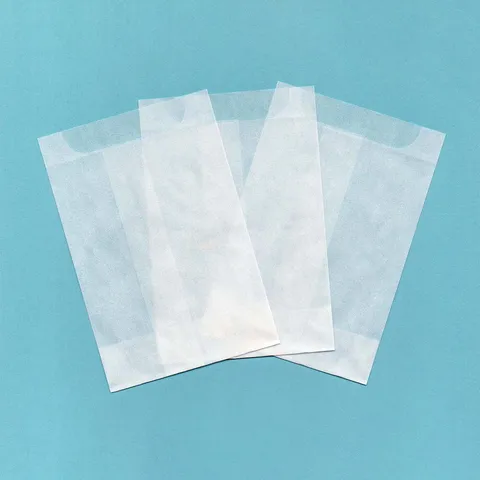
Greaseproof paper sits between those two. The sheet is dense enough that oil stays on the inside face, and open enough that moisture leaves slowly. The print on the outside stays clean.
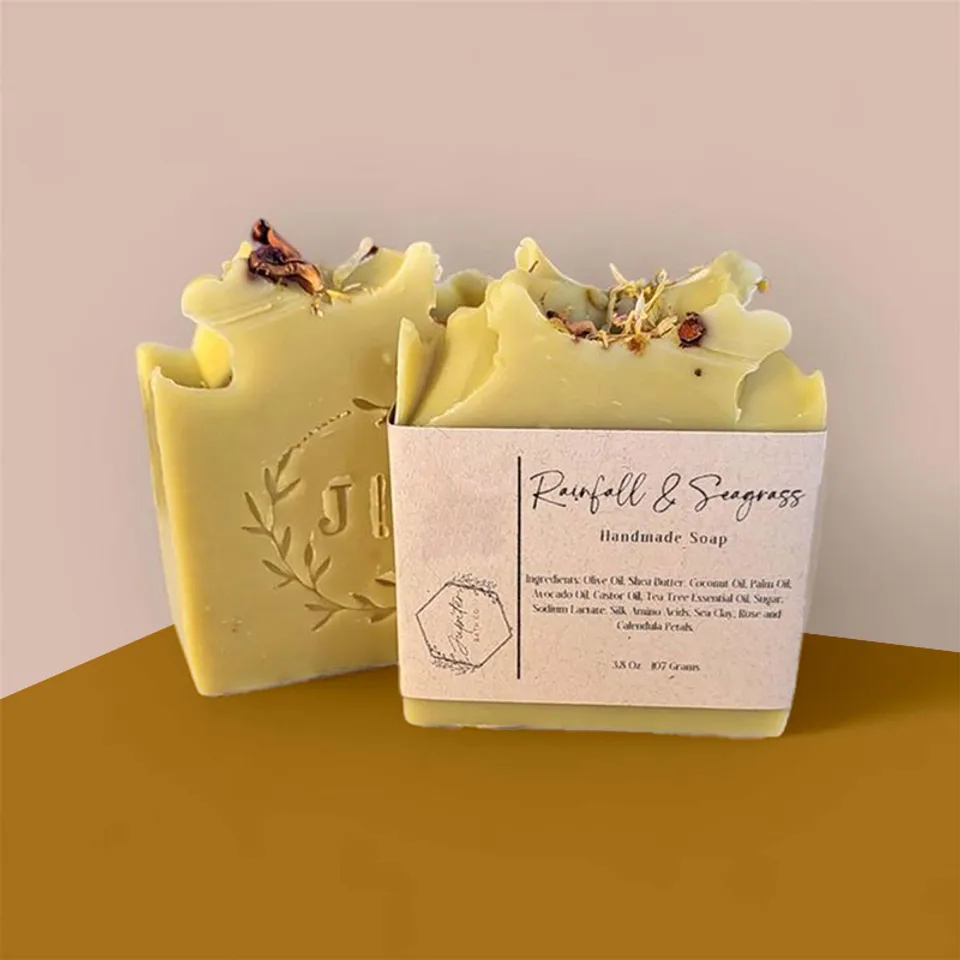
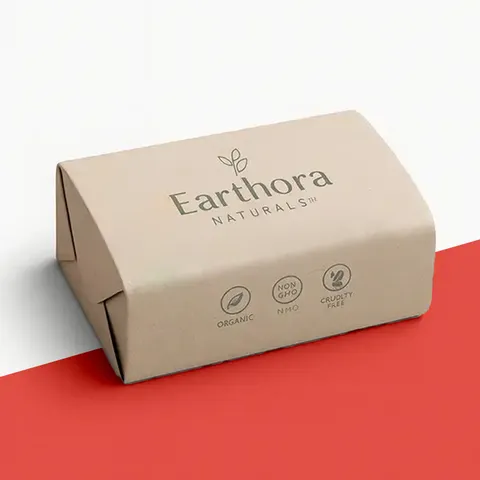
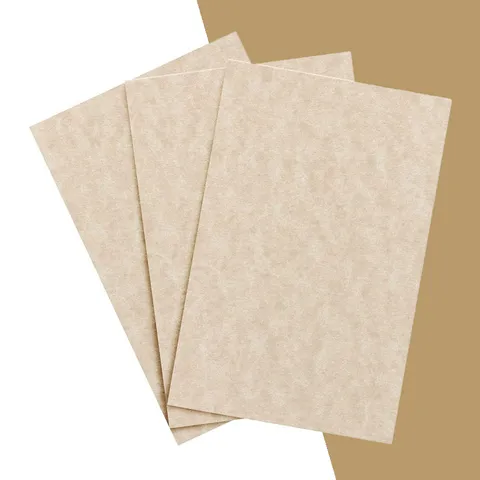
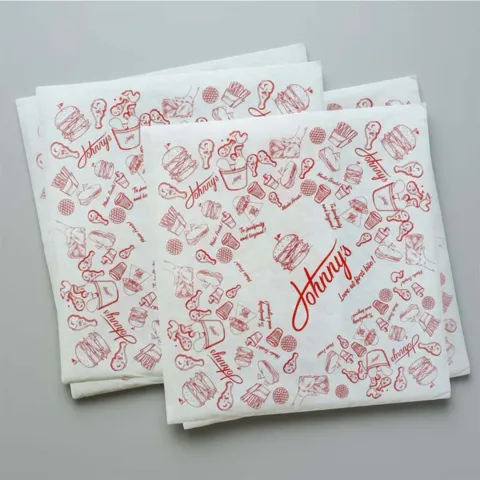
The photos show the three ways soap makers use it: a bar inside a full wrap with a blank panel on top for a label, a flat printed sheet before folding, and a bar with a plain kraft band beside an unwrapped one.
Which sheet size wraps my bar?
A full wrap needs the bar's length plus twice its height in one direction, and its width plus twice its height plus the end folds in the other. The four typical sizes cover most bar molds.
| Typical sheet | Bar it fully wraps | Also used for |
|---|
| 6 × 6 in | Guest bars around 2 × 1.5 × 0.75 in | A wide band on a standard bar |
|---|
| 8 × 8 in | Small bars around 3 × 2 × 1 in | Round bars up to 2.5 in across |
|---|
| 10 × 10 in | Standard bars around 3.5 × 2.5 × 1 in | Tall loaf-cut bars with a short end fold |
|---|
| 12 × 12 in | Chunky bars around 4 × 3 × 1.25 in | Two guest bars wrapped as a pair |
|---|
Measure the bar after it has cured, not on cutting day, because it shrinks a little. If your mold gives an odd shape, send the three dimensions and we will cut a custom sheet to the fold; the sheet and roll size chart shows the measuring method.
How does cold-process soap behave inside paper?
Three things happen. Water keeps leaving, so the bar shrinks and a tight wrap loosens by a hair over a month. Superfat oils migrate to the surface and would mark an untreated sheet within days. And essential oils gas off a little, which is why a wrapped bar still smells on the shelf.
A greaseproof sheet handles the oil, and because it breathes the shrinkage does not trap moisture against the bar. Hot-process and melt-and-pour bars behave differently: they sweat more in humid rooms, and the paper gives that moisture somewhere to go.
Wrap at four to six weeks for cold process, when the bar is dry to the touch and has stopped losing weight day to day. Never wrap a warm bar.
Three ways to fold the sheet
The full wrap in the photo is the one most makers settle on, because it covers every face and still shows the label panel on top. Here is the fold for a rectangular bar on a 10 × 10 in sheet.
- Lay the sheet printed side down and set the bar face down in the center, so the top of the bar will land on the blank panel.
- Bring the two long edges up over the base of the bar and overlap them by about an inch; a glue dot or a small sticker holds the seam.
- At each end, push the paper in against the bar to form two triangles, then fold the top flap down and the bottom flap up.
- Tuck the last flap under or seal it with your label sticker, and turn the bar over so the panel faces up.
- Let wrapped bars sit a day before boxing so the creases settle and the seam does not lift.
The other two folds are a belly band cut from the same sheet, which leaves the ends open, and a pillow fold where the sheet is gathered at the top like a candy twist for round bars.
Patterns, blank panels and what prints well
The wrap in the third photo shows the layout that works: an all-over pattern in one or two colors with a clean white rectangle left for a label. One print then covers every scent, and the label sticker carries the name and the ingredients.
On white stock the pattern can be up to four colors with Pantone solid-coated matches. On kraft keep it to one color; a second color on brown paper muddies, and the kraft itself is already doing a lot.
Step-and-repeat patterns do not care where the fold lands. A single logo does, so it has to be placed for the top face of a known bar size, which is why we ask for bar dimensions before the proof. Our guide to wrapping soap in paper goes through the layout in more detail.
Weight and finish in the hand
Soap wrap is lighter than food wrap. At about 25–35 lb the sheet creases sharply and the end folds stay flat; a heavier sheet springs open at the corners and needs tape, which looks wrong on a handmade bar.
Matte is the default and suits soap. A textured sheet adds a linen feel under the fingers and hides handling marks on dark colors, and it prints a touch softer, which flatters line drawings and botanical patterns.
Kraft at the lighter end feels like a grocery bag; white at the same weight feels like a good envelope. Ask for a sample of both on the quote before you commit to a run.
Can I print the scent name on the wrap instead of a label?
You can, but each scent then becomes its own print run of at least 1,000 sheets. A maker with eight scents and 200 bars of each is better served by one pattern and a sticker.
The middle path is to print a short list of scent names on one edge with a tick box beside each, and mark the box by hand. It reads as handmade and keeps the run to one plate.
If one scent is most of your sales, print that one properly and band the rest. That is what the band-and-bare pairing in the first photo is about.
Mistakes to avoid
Most soap wrap problems are timing, not paper.
- Wrapping before the cure is done, so the bar shrinks inside and the wrap goes slack.
- Wrapping bars straight from a warm drying rack; the heat softens the sheet and the folds never crisp.
- Choosing wax paper for the job; the wax seals the bar and traps the moisture that greaseproof paper lets out.
- Running clear tape across the printed face, which yellows and lifts the ink; seal on the base or with a sticker.
- Storing wrapped bars in a humid stockroom where the sheet softens and the pattern can transfer between bars.
Ordering soap wrapping paper
Send the bar dimensions, the fold you use, the stock and how many colors. The minimum run is 1,000 sheets or one roll, and you will have a written quote within one business day.
A free proof follows, with the fold lines drawn on the artwork so you can see where the pattern breaks and where the panel sits. Edit it as many times as you need. Once you approve, production takes 4–6 business days.
Delivery to US addresses is free and tracked, usually 2–3 business days, and anything misprinted or damaged reported within 10 days with photos is reprinted or refunded. If you want the bar visible, look at printed soap bands instead of a full sheet.