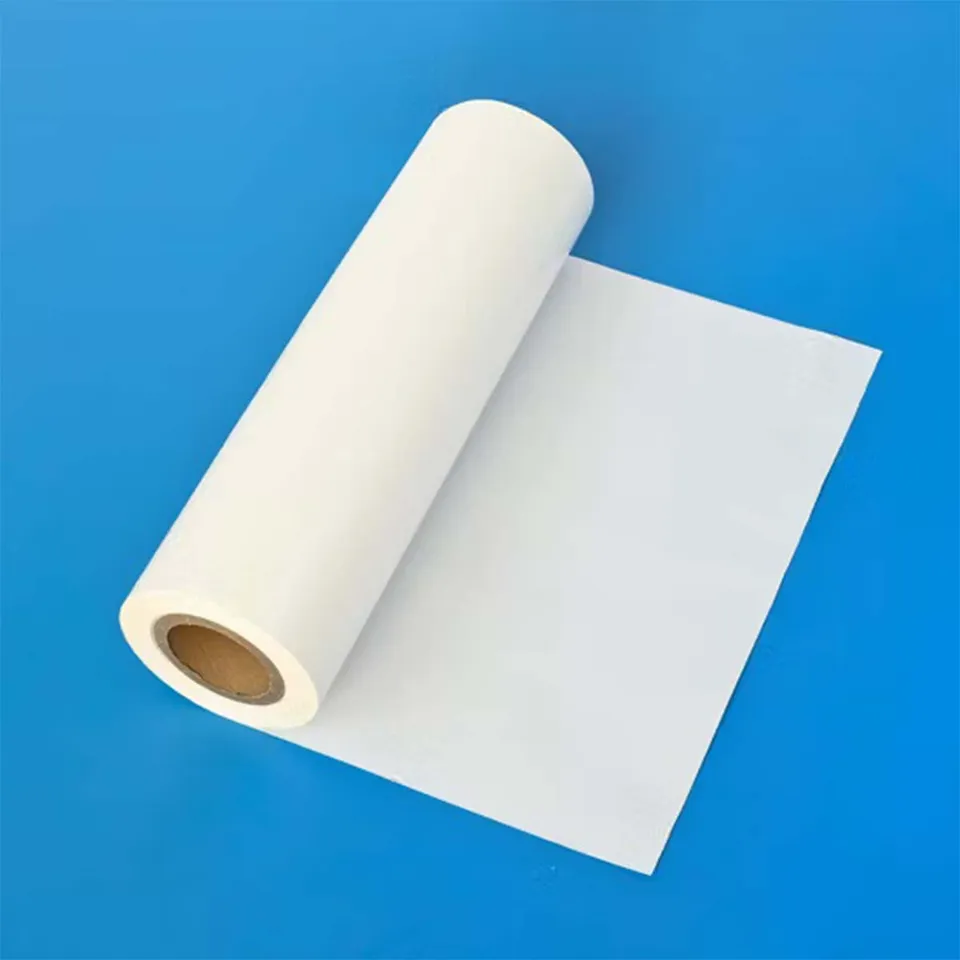
Glassine wound on a core for the cutting station
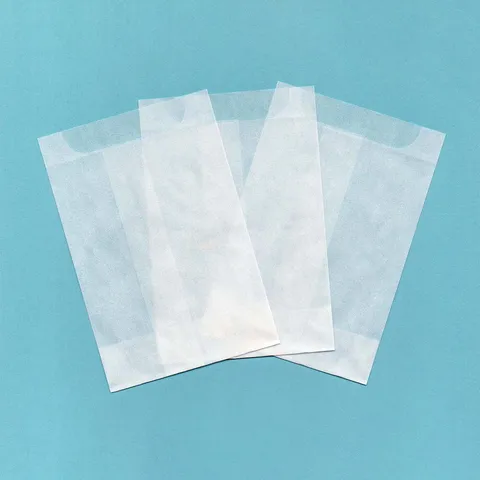
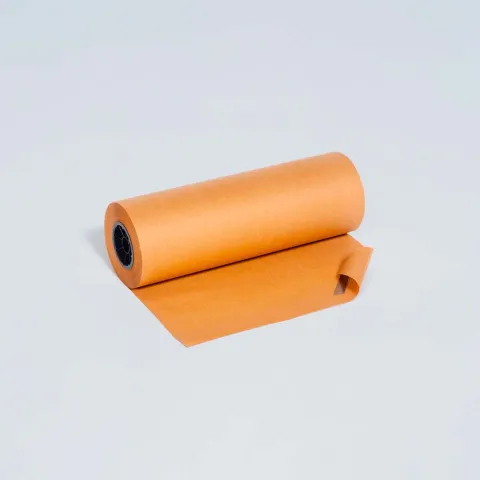
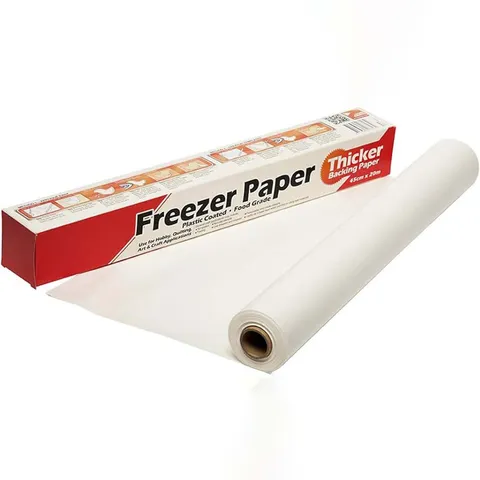
The photos tell you most of what you need. A white roll on a brown cardboard core unwinds onto a flat, slightly glossy sheet. A shorter roll lies on its side with the core showing. And three rolls stand together, two bright white and one with a warm cream tint.
That cream roll is the same glassine with a natural tint rather than a bleached white base. Both print the same way; the tint warms the color of the ink a little.
Rolls suit the back of house rather than the display case. Chocolatiers, butchers, sandwich counters, caterers and bakeries with a packing bench are the usual buyers, because they tear paper by the foot and want one roll to cover several jobs.
What is a glassine paper roll used for in a kitchen?
Interleaving is the first job. A sheet torn from the roll goes between burger patties, cheese slices, cookie dough rounds or cuts of fish before they are stacked and chilled, and the stack comes apart cleanly later.
Lining is the second. Candy trays, display boards, sheet pans for cooled chocolate work and the inside of pastry boxes all take a strip cut to length. Glassine releases set chocolate without pulling the shine off it.
Wrapping is the third, and it is the one that benefits from print. A sandwich counter that wraps on a bench pulls a length, folds it around the item and tears, and a repeat logo along the roll means every wrap carries the name.
Which roll width fits a deli slicer or a wrapping bench?
Width is the choice that matters. Length only decides how often you change the roll.
| Typical roll | Where it sits | Pulls |
|---|
| 12 in × 500 ft | Beside a slicer or on a small counter cutter | Interleaving slices, wrapping half sandwiches, lining candy trays |
|---|
| 15 in × 500 ft | Sandwich bench, chocolate room | Wrapping full sandwiches, lining half sheet pans |
|---|
| 18 in × 1,000 ft | Packing bench with a bench dispenser | Wrapping subs and loaves, lining full sheet pans, box lining |
|---|
| 24 in × 1,000 ft | Floor-stand dispenser in a prep room | Lining large trays, wrapping whole cakes, covering boards |
|---|
Any other width is a custom slit. If your dispenser takes an odd width, measure the inside of the box or the distance between the end plates and give us that number on the quote.
Heat, moisture and the limits of glassine
Glassine has no wax, so there is nothing to melt, but it is also no barrier to water. A hot sandwich wrapped in it will steam the sheet soft within minutes. A cold sandwich stays crisp for hours.
Oil is the thing it handles well. Butter, chocolate fat, cheese oil and the grease from a cured sausage stay on the surface and do not darken the paper.
Treat it as a cold and room-temperature paper. It is not oven paper and it should not go under a heat lamp. If you need something for hot food, that is a different sheet and our greaseproof versus wax paper guide walks through which one.
Can one roll of glassine be the whole order?
Yes. The minimum for rolls is a single roll, printed or plain, and that is how most first orders arrive. A 12 in by 500 ft roll beside the slicer is a sensible trial before committing to a case.
Printed rolls carry a setup for the plate, so one printed roll costs more per foot than ten. The written quote shows the price for one roll and for a case so you can see the gap before you decide.
Plain rolls have no setup. If you want to test the paper before you print on it, order one plain roll first and ask for a printed quote at the same time.
Printing a repeat along the roll
Roll printing is step-and-repeat by nature. Your mark prints in a continuous pattern down the length, so wherever the paper is torn the logo shows somewhere on the piece.
Keep the repeat loose. A logo about 2 in wide, repeated every 4 to 5 in with a staggered grid, reads as branded without looking like gift wrap. Dense repeats also use more ink, and on glassine heavy ink coverage can slightly curl the sheet.
One color is the usual pick for rolls and two is the sensible maximum. Black, deep brown and dark green sit well on both the white and the cream base. Pantone solid-coated matches are available and shown on the proof.
Because the paper is translucent, the print shows faintly from the back. On a wrap that is no problem. On a tray liner, lay the printed side up.
Weight, tint and finish on the roll
Glassine for rolls runs about 25 to 45 lb. Light weights tear easily on a serrated edge and suit interleaving and sandwich wrapping. Heavier weights resist tearing, which is what you want for a tray liner that gets scraped or a board cover that is wiped down.
Both faces are polished, so there is no right and wrong side on a plain roll. Printed rolls have a print face, and the wound roll is made with that face out so the pattern shows as it comes off.
- White, light weight: slicer interleaving, patty separation, cookie dough rounds
- White, medium weight: sandwich wrapping on a bench, pastry box lining
- Cream tint, medium weight: a farm or bakery look where a brown or black one-color print suits
- White, heavy weight: chocolate work surfaces, tray liners that get handled all day
Mistakes to avoid when switching from sheets to rolls
The first is ordering by length when the problem was width. A roll that is 2 in narrower than the sandwich leaves no fold, however long it is.
The second is dispenser fit. A boxed roll with a serrated edge needs the roll diameter to fit the box, and a 1,000 ft roll will not. The 1,000 ft lengths are for bench or floor dispensers with a bar through the core.
The third is storing a roll on its end on a damp floor. Glassine takes on moisture from the edge and the outer wraps go wavy. Keep rolls on a shelf, in the wrap, on their side.
The fourth is expecting a roll to behave like a cut sheet in a display case. Torn edges look like torn edges. For a pastry case with a tidy look, order cut sheets instead.
How to order glassine paper rolls
- Choose a width from the table or give us the inside measurement of your dispenser, and pick 500 ft or 1,000 ft.
- Say white or cream and whether the roll is plain or printed; for printed, upload a vector logo and the number of colors.
- We send a written quote within one business day with the per-roll and per-case figures side by side.
- Approve the quote and, for printed rolls, a free design proof follows with the repeat laid out on a strip; edits are unlimited.
- Winding and printing take 4 to 6 business days after approval, and free tracked delivery to a US address follows in 2 to 3 business days.
- Check the roll on arrival; a wrong print or a crushed core reported with photos inside 10 days gets a reprint or a refund.
Rolls that need to match a bag print already running can be set from the same file. Mention the earlier order on the glassine roll quote form and we pull the artwork across.