What is greaseproof paper?
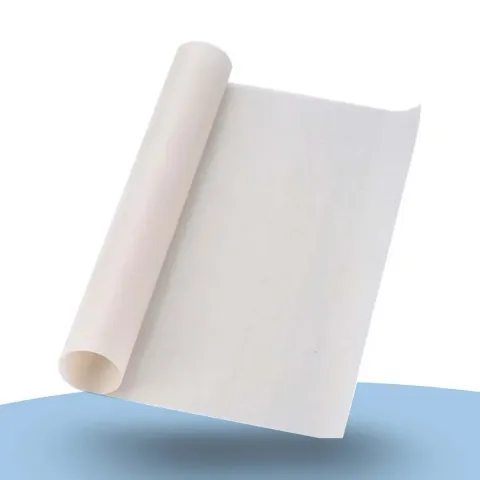
Greaseproof paper is a dense, uncoated sheet. The pulp is beaten for longer than ordinary paper, so the fibers knit tightly and oil has no easy path through.
There is no wax, no film and nothing to melt. That is why a greaseproof sheet can sit under a heat lamp or line a hot tray without changing.
Hold a sheet up to a window and you will see a slightly mottled, even translucence. That look comes from the tight fiber mat, and it is the quickest way to spot real greaseproof against ordinary kraft.
Basis weights run from about 25 lb for a light wrap to about 45 lb for a sturdy liner. Most of the papers in our greaseproof sheets range sit in the 30 to 40 lb band.
What is wax paper?
Wax paper starts as a lighter base sheet, then takes a coating of paraffin or a dry wax. The wax fills the surface and gives it that slightly slick, slightly translucent look.
The coating is the barrier. Grease and water stop at the wax, not at the fibers, so the base paper can be thinner. Rub the sheet between finger and thumb and you feel the wax as a faint drag.
The catch is temperature. Paraffin softens at about 140°F (typical) and dry wax at about 180°F (typical), so wax paper belongs with cold and warm food, not hot. The custom wax and paraffin paper range covers both coating types.
Which paper takes heat?
Heat is the question that decides most orders. Here is how each paper behaves as the thermometer climbs.
| Paper | Typical limit | What happens past it |
|---|
| Oven-safe greaseproof | Up to 400°F | Browns slowly at the edge, no transfer |
|---|
| Standard greaseproof | Heat lamp and hot hold | Stays dry, may go slightly brittle over hours |
|---|
| Dry wax paper | About 180°F | Wax softens, sheet goes limp and shiny |
|---|
| Paraffin paper | About 140°F | Wax melts into the food and the print |
|---|
| Freezer paper | 0°F and up | Poly side holds in the cold, never bake with it |
|---|
A burger straight off the flat-top is well above 140°F. Wrap it in paraffin paper and the wax will soften against the bun within a minute.
Which one holds back grease longer?
Both stop grease at first. The difference shows at twenty minutes, which is how long a delivery order sits in a bag. A sheet that looks clean at the counter can be blotched by the time it reaches a doorstep.
Greaseproof relies on fiber density, so the hold-out is the same all the way through the sheet. Hot fat slows it down but does not switch it off. A 35 lb sheet under a heat lamp still looks clean after a long hold.
Wax paper holds grease well while the wax is solid. Warm the sheet and the coating thins, and the fat finds its way into the base paper and out the far side.
For anything served hot in paper, that tips the choice toward a greaseproof burger wrap paper every time.
Moisture, steam and sweating cheese
Moisture is where wax paper wins. Water beads on paraffin, so a deli counter wrapping sliced meat or a wedge of cheese keeps the surface from drying out.
Greaseproof lets water vapor through slowly. For a hot sandwich that is a good thing, because the steam escapes and the bread stays crisp instead of soggy.
Cheese is the classic case. Wrap a soft cheese in wax paper and it sweats under the coating. Wrap it in greaseproof and it breathes, but the cut face can dry. Many cheese shops use greaseproof for the first wrap and a wax sheet outside it.
How do the two papers print?
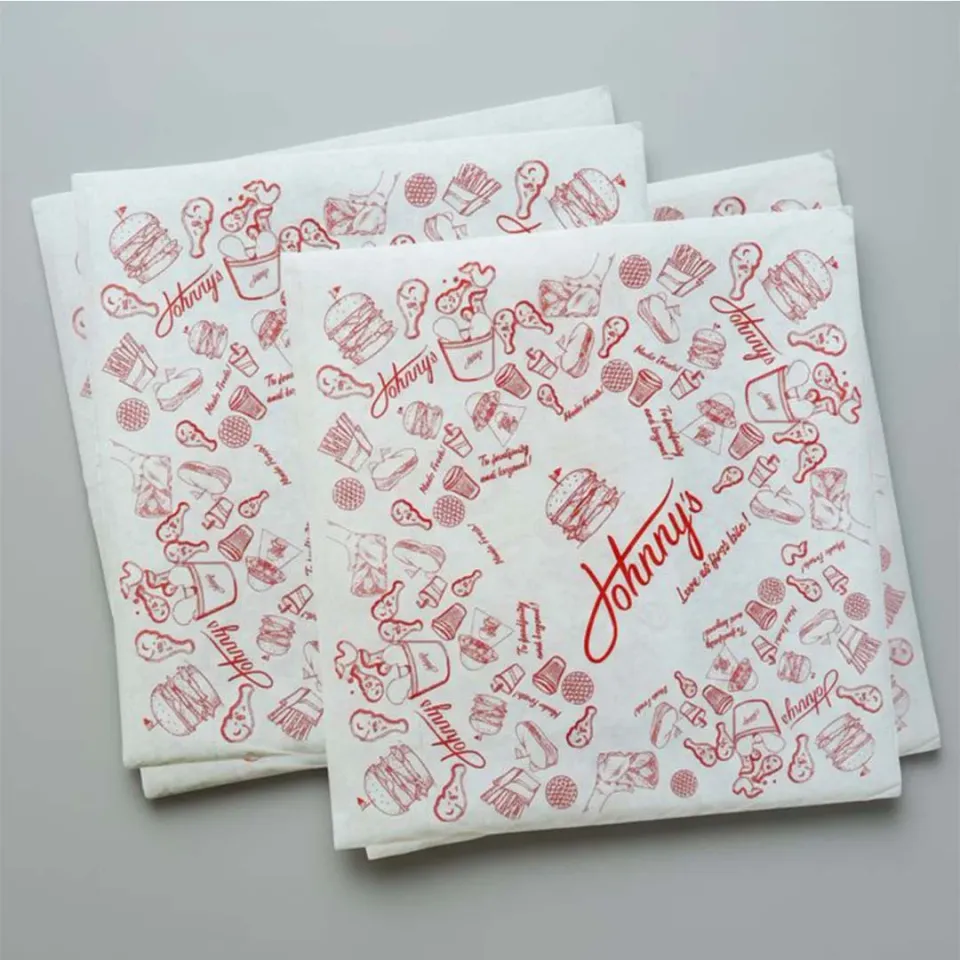
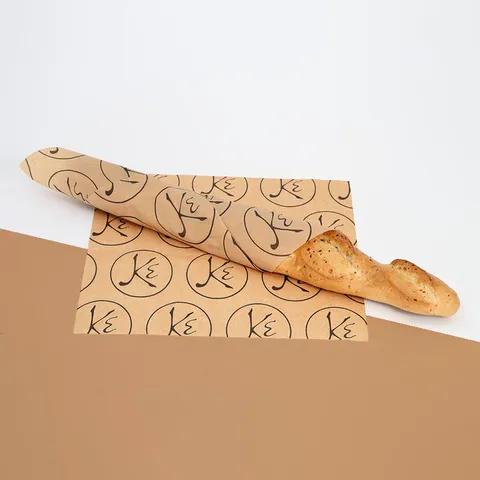
Greaseproof takes ink the way any dense paper does. One or two spot colors on kraft or white stock give a crisp logo with a soft, matte look. The photo on our greaseproof sheets page shows a single dark logo repeated across kraft, which is the look most delis and bakeries ask for.
Wax paper is printed before the wax goes on, so the ink sits under the coating. Colors read a touch softer and the sheet has a faint sheen.
Fine type under 6 pt is risky on either paper. Set your logo bold, keep it to one or two Pantone matches and it will hold. Our guide to printing on greaseproof paper covers file preparation in detail.
Which paper for which food?
If the food is hot, oily or served under a lamp, pick greaseproof. If it is cold, moist or going in a display case, pick wax. When a menu has both, run the same artwork on both papers so the counter looks consistent.
- Burgers, fried chicken, fries, hot subs: greaseproof, 30 to 35 lb.
- Basket and tray liners under hot food: greaseproof, 35 to 40 lb.
- Deli meat, cold cuts, sliced cheese: wax or paraffin paper.
- Sandwiches sold cold from a case: wax paper, folded, or a dry wax sheet.
- Candy, fudge and caramels: wax paper, since it releases cleanly from sugar.
- Bakery items with butter or frosting: greaseproof for warm, wax for chilled.
- Soap bars and cold-process batches: greaseproof, because the oils keep moving for weeks.
Cold sandwiches wrapped in printed custom wax paper stay fresher in a case than the same sandwich in greaseproof.
How to test a sample before you commit
A few sample sheets protect you from a 1,000-sheet misprint. Ask for them on your quote and run this test in your own kitchen.
- Wrap your actual menu item the way staff will wrap it, not a tidy demo version.
- Set it under your heat lamp or in the hot-hold cabinet for the longest wait a customer sees.
- At ten and twenty minutes, lift the wrap and look at the outside for dark grease patches.
- Hold the sheet to a window. Translucent spots show where oil has crossed the fibers.
- Check the printed side for ink that has lifted, smeared or shifted color.
- Fold a cold sheet five times at one corner and see if the coating cracks.
If the greaseproof sheet passes but feels thin in the hand, step up one weight rather than switching paper type.
Mistakes we see when businesses switch
The most common one is buying wax paper for hot food because it looks nicer on the shelf. It does look nicer, until the wax is on the bun.
The second is choosing greaseproof for a cold display case and then wondering why the sandwiches dry out by mid-afternoon.
The third is ordering a size that fit the old paper. Wax paper is slicker, so a wrap that held on greaseproof slides open at the same size. Go an inch larger each way.
A quieter mistake is keeping one dispenser for both papers. Staff grab whichever is nearest, and a hot sandwich ends up in wax. Label the boxes or keep them at different stations.
Ordering either paper
Tell us what you serve, how hot it is when wrapped and how long it sits. A phone photo of the food in its current wrap helps more than a long description. We will suggest greaseproof or wax, a weight and a sheet size, then send a written quote within one business day.
A free design proof follows before anything prints, and production runs 4 to 6 business days after you approve it. Minimum order is 1,000 sheets or one roll.
Send your logo and a photo of the food through the written quote request form and we will take it from there.