What size sheet wraps a 5 inch brioche bun?
Go to 14 × 14 in. A 5 inch bun with a tall patty stack needs more than 12 × 12 in to fold under and still cover the lid, and brioche crumbs need the extra tuck.
By the team at The Greaseproof Paper ·
A wrap that is an inch too small opens in the bag, and one that is three inches too big wastes paper on every order. This guide matches sheet sizes to the foods US counters actually serve.
Measure the food at its widest point, then add enough to fold. For a full wrap, two heights plus the width plus two inches is a safe sheet width.
A 4 inch burger that stands 3 inches tall needs about 10 inches of paper to go under, over and tuck. That is why 10 × 10 in is the small burger standard. Measure with a ruler, not by eye; most people guess a bun an inch smaller than it is.
Square sheets suit round food. Rectangles suit long food, with the long side running along the sub or hot dog. The sheet and roll size chart lists the four typical cuts for every paper.
A single patty on a 4 inch bun wraps cleanly in 10 × 10 in. There is enough to fold the ends under and the logo lands on top.
A 4.5 inch bun with lettuce and tomato wants 12 × 12 in. This is the size most burger bars run, because it covers a single generously and a double adequately.
A double or a smash stack with a tall bun needs 14 × 14 in. Anything smaller leaves the top of the bun bare and the wrap slips when the bag tips. Our burger wrap paper is cut in all three, plus 12 × 16 in for a long roll.
A 6 inch sub wraps in 12 × 12 in with the sub laid corner to corner. A 12 inch sub needs 12 × 16 in, laid along the 16 inch side, with the ends twisted or folded.
Hot dogs take a half sheet. Cut 12 × 16 in in half lengthways for a 6 × 16 in strip. Or order 6 × 10.75 in as a custom cut for a standard bun. The white bag in our burger wrap photos shows the same idea as a pre-formed sleeve.
A tortilla wrap is a cylinder. Roll it in 12 × 12 in, fold the bottom up and leave the top open so steam escapes and the tortilla stays soft.
Two pieces of fried chicken sit in a 12 × 12 in sheet folded into a pouch. Four pieces want 12 × 16 in or a basket liner under them instead.
Tacos are served open, so the sheet is a liner, not a wrap. A 10 × 10.75 in sheet under two tacos catches drips without showing past the tray.
A breakfast sandwich on an English muffin is small. 10 × 10 in is plenty, and the smaller sheet keeps the wrap tight so the egg does not slide.
Wings are the exception to the wrap rule. They go in a basket or a boat on a liner, never in a wrap, because the sauce needs somewhere to go.
A liner should cover the basket floor and climb the sides by an inch, no more. Too much paper and it folds over the food and traps steam.
The common 9 × 6 in plastic basket takes a 10 × 10.75 in liner. The larger 12 × 8 in basket takes 12 × 12 in. A 12 × 16 in sheet lines a double basket or an oval platter.
Lay the sheet with the print facing up before the food goes in. Greaseproof basket liners in these four sizes are the usual choice for pubs and wing bars.
A quarter sheet pan is 9 × 13 in, so the liner is the same, cut flat with no overhang. A half sheet pan is 13 × 18 in and takes a 12 × 16 in liner that sits inside the rim.
A full sheet pan at 18 × 26 in wants 16 × 24 in, the largest standard cut. That leaves an inch clear on each side so the liner does not lift in the oven.
Air fryer baskets vary. 6.5 × 6.5 in fits most compact units, and 8 × 8 in fits a family size. Tray and air fryer liners are cut square so they lie flat without creasing.
Every size in this table is a typical cut, the ones we keep set up. If your bun or basket is a different size, a custom cut is quoted the same way.
| Food | Item size | Sheet size | Notes |
|---|---|---|---|
| Single burger | 4 in bun | 10 × 10 in | Tight wrap, logo on top |
| Loaded single | 4.5 in bun | 12 × 12 in | The usual pick |
| Double or smash stack | 4.5 in bun, tall | 14 × 14 in | Covers the lid |
| 6 in sub | 6 × 3 in | 12 × 12 in | Corner to corner |
| 12 in sub | 12 × 3 in | 12 × 16 in | Twist the ends |
| Fry basket | 9 × 6 in | 10 × 10.75 in | Liner, print up |
| Half sheet pan | 13 × 18 in | 12 × 16 in | Inside the rim |
| Compact air fryer | 6.5 in basket | 6.5 × 6.5 in | Flat, no overhang |
Print the table and tape it by the wrap station for the first week. New staff pick the right sheet faster with a chart than with a demonstration.
Deli counters use 10 × 10.75 in and 12 × 12 in for sliced meat and cheese. The odd 10.75 inch dimension comes from the dispenser box, so sheets pull out one at a time.
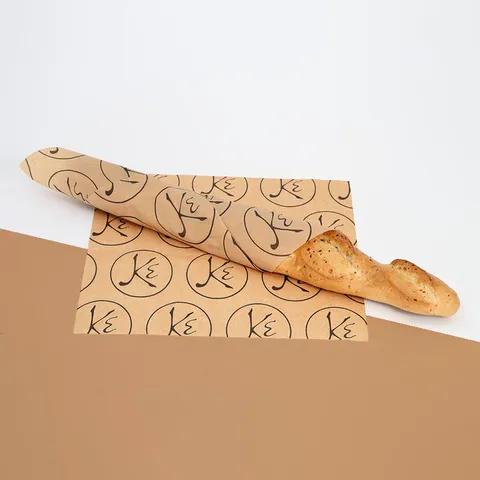
Bakery sheets go bigger. A 15 × 15 in square wraps a loaf or a dozen cookies, and 12 × 16 in lines a bakery tray for a display. The kraft sheet in our baguette photo is a 15 × 15 in square rolled around a loaf.
Pastry with butter needs the sheet, not just a bag. Custom printed greaseproof sheets at 15 × 15 in are what most bakeries end up using for anything that leaves the counter warm.
Work through this once per menu item and the answer usually settles on two sizes for the whole counter.
Two sizes, one for wraps and one for liners, cover most menus. A third size is worth it only when a single item sells in volume.
Sizing errors are the easiest mistakes to make and the most annoying to live with, because they show on every single order.
Tell us the food and the sizes you are between, and we reply with a written quote within one business day. Production is 4 to 6 business days after the free proof, with free tracked delivery in the US. Start on the quote request page.
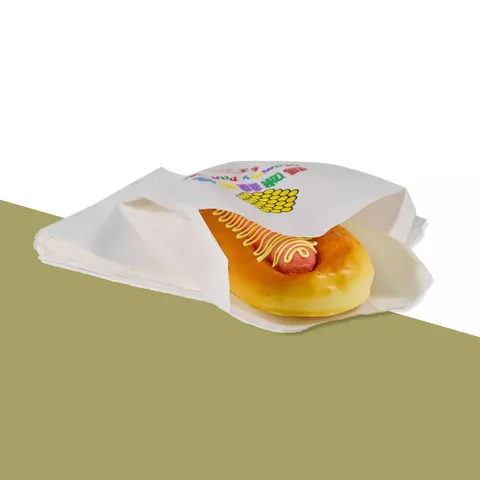 Burger Wrap PaperFrom $0.30 a sheet10 × 10 in · 12 × 12 in · 14 × 14 inBurgers, chicken sandwiches, wrapsSee this paper
 Greaseproof Basket LinersFrom $0.30 a sheet10 × 10.75 in · 12 × 12 in · 12 × 16 inFry baskets, trays and platesSee this paper
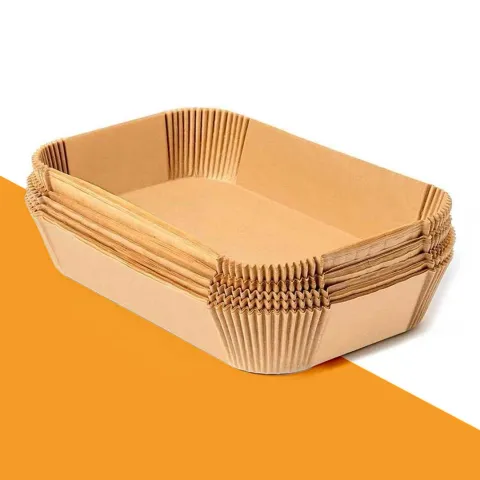 Tray and Air Fryer LinersFrom $0.30 a liner6.5 × 6.5 in · 8 × 8 in · 9 × 13 inSheet pans, hotel pans and air fryersSee this paper
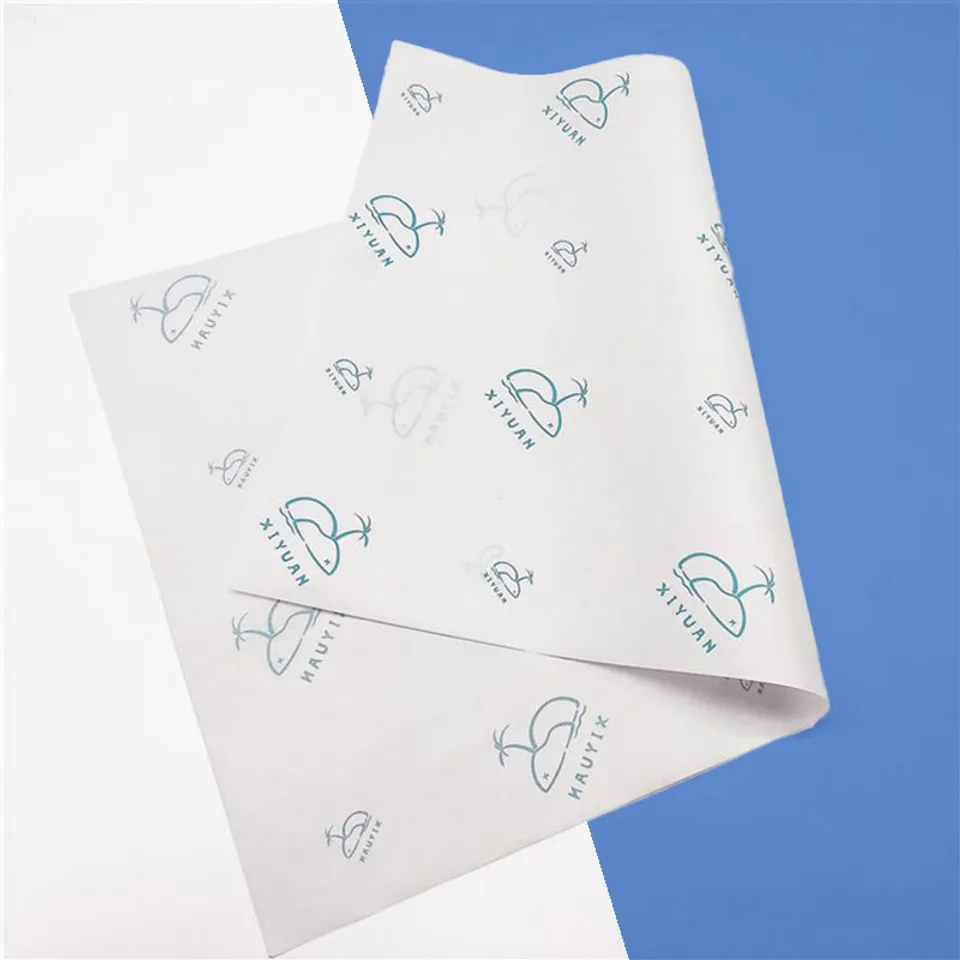
 Custom Printed Greaseproof SheetsFrom $0.30 a sheet10 × 10.75 in · 12 × 12 in · 12 × 16 inLogo wraps for hot foodSee this paper
What buyers ask before a first order. Type a word to filter the cards, or open one to read the full answer.
Go to 14 × 14 in. A 5 inch bun with a tall patty stack needs more than 12 × 12 in to fold under and still cover the lid, and brioche crumbs need the extra tuck.
Yes, 12 × 16 in. The 6 inch sub wastes a few inches at each end, but one size at the station is simpler than two.
Yes, 12 × 16 in. The 6 inch sub wastes a few inches at each end, but one size at the station is simpler than two. If 6 inch sells far more, add 12 × 12 in later.
About an inch up each side of the basket. More than that and the paper folds over the food and traps steam, which turns fries soft in two minutes.
It is the length that pulls cleanly from a standard counter dispenser box.
It is the length that pulls cleanly from a standard counter dispenser box. Sheets at 10 × 10.75 in interleave in the box and come out one at a time.
Because the pan is 13 × 18 in at the rim, not the base, so a 12 × 16 in sheet sits flat on the base without climbing the sides or lifting in the oven.
Tight. A loose wrap slides in the bag and the logo ends up anywhere.
Tight. A loose wrap slides in the bag and the logo ends up anywhere. Size so the ends tuck with about an inch of overlap and no more.
Yes, cut lengthways it gives two 6 × 16 in strips, which wrap a standard dog with the ends twisted.
Yes, cut lengthways it gives two 6 × 16 in strips, which wrap a standard dog with the ends twisted. If you want them pre-cut, 6 × 10.75 in is a straightforward custom size.
Along the long side, so the logo reads upright when the sheet is laid under a sub.
Along the long side, so the logo reads upright when the sheet is laid under a sub. For a step-and-repeat it hardly matters, because some of the pattern always faces out.
The finished burger, built the way it is sold, with toppings.
The finished burger, built the way it is sold, with toppings. The bun alone can be an inch shorter than the stack, and that inch is the difference between a closed wrap and an open one.
One size, 12 × 12 in, for everything hand-held. It wraps a burger, folds a taco pair and lines a boat, and a single dispenser takes less counter space than two.
No match. Ask us on WhatsApp or call (503) 461-4788.
Send the paper, a size and a quantity, plus a logo if you have one. We reply in writing within one business day with a price and a free design proof. Prefer to talk? Call (503) 461-4788 or message us on WhatsApp.